


Email marketing returns an average of $36 for every $1 spent, which no other digital channel comes close. And yet, most e-commerce brands are leaving the majority of that money on the table, not because sending email campaigns doesn’t work, but because they’re running it wrong.
After working with online stores across North America, we’ve seen the same patterns repeat. Some mistakes are invisible from the outside and others look like smart marketing right up until the revenue numbers stop making sense. All of them cost more than most realize.
This isn’t a list of beginner tips, these are the seven specific mistakes we see killing e-commerce email campaigns, along with the practical fixes that actually turn things around.
Mistake #1: emailing people who never asked to hear from you
Buying email lists, or adding contacts without explicit opt-in, is the most common way brands destroy their email program before it ever gets started.
It feels like a shortcut to reach, but it works the other way. People who never signed up for your list don’t know your brand, don’t expect your emails, and will mark them as spam. When enough of them do, Gmail and other inbox providers flag your domain as one not to trust. That reputation damage lingers, affecting deliverability even for the engaged subscribers who did sign up voluntarily.
The fix: Build your list through consent-based channels only. Use sign-up forms with a clear value exchange: a discount, early access, or genuinely useful content. Run lead generation ads that set honest expectations about what subscribers will receive.
Mistake #2: no automation flows
Many e-commerce brands treat email as a broadcast channel, a place to send promotions on Tuesday and newsletters on Friday. The problem with that approach is that it ignores the moments when customers are most ready to buy.
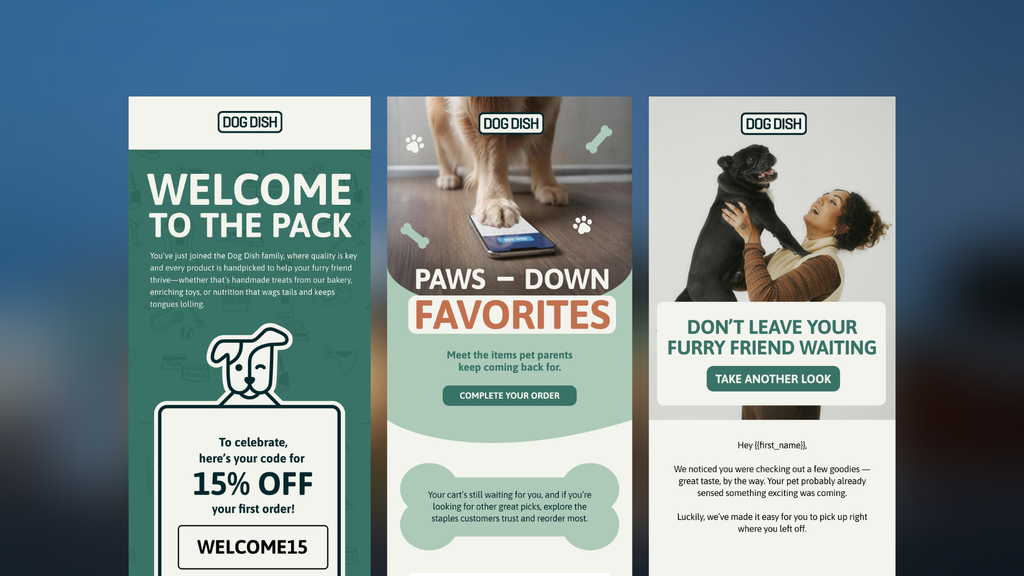
Automated flows reach people based on behavior, not a calendar. An abandoned cart email goes out when someone leaves a product behind; A welcome sequence starts when someone signs up; A win-back flow triggers when a customer goes quiet for 90 days. Each of these emails goes out at the exact moment the customer has shown intent, which is why they convert at rates that manual campaigns rarely match.
Abandoned cart flows alone can recover 10 to 15 percent of otherwise lost sales. Welcome sequences consistently generate higher open rates than any promotional campaign, while post-purchase flows build the repeat buying behavior that determines whether a brand grows or plateaus.
The fix: Before optimizing your campaigns, build your core automation flows. At minimum: a welcome sequence (3 to 5 emails), an abandoned cart flow (2 to 3 emails spaced at 1 hour, 24 hours, and 72 hours), a post-purchase follow-up, and a win-back sequence. These run continuously in the background and generate revenue without additional effort on your part.
Mistake #3: poor segmentation
Sending the same email to your entire list is one of the fastest ways to teach people to ignore you.
Your list holds customers who have bought multiple times, people who subscribed months ago and never purchased, first-time buyers from last week, and people who open every email but click nothing. These are not the same audience, as an email that resonates with a loyal repeat buyer will feel irrelevant, or annoying, to someone who hasn’t made their first purchase yet.
The numbers from Mailchimp’s own platform data are hard to argue with as segmented campaigns generate:
- 14.31% higher open rates
- 100.95% higher click rates
- 9.37% lower unsubscribe rates compared to non-segmented sends.
The lift comes from relevance: when people receive content that matches where they actually are in their relationship with your brand, they engage with it.
The fix: Start with two foundational segments: customers vs. non-customers, and engaged vs. unengaged subscribers. From there, layer in purchase frequency and product category.
Mistake #4: the discount trap
This one is arguably the most insidious mistake on this list, because it looks like it’s working.
Run a flash sale, watch revenue spike, report strong numbers for the week, and repeat. Over time, you’re not building a customer base, you’re building an audience that waits for your next sale before buying. They train you just as much as you train them.
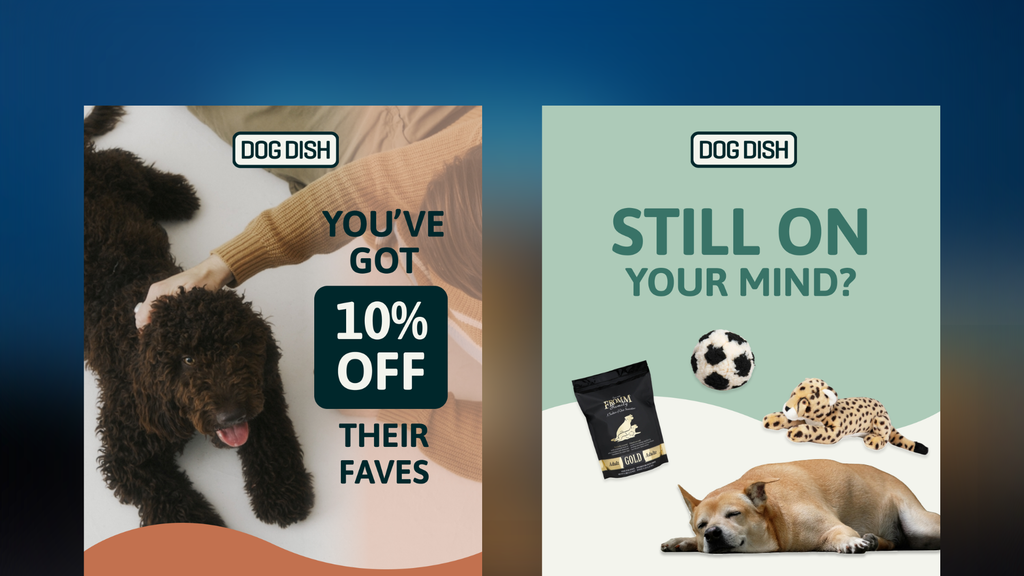
A 10% discount can erase up to 40% of your profit margin depending on your cost structure. Run enough of them and you’ve built a brand that can only generate revenue by giving away margin, leaving full-price emails to get ignored.
Many agencies recommend heavy promotional calendars because discounts produce measurable spikes that look good on weekly reports. The fact that those spikes hollow out brand equity doesn’t show up until much later, and by then, it’s someone else’s problem.
The fix: Shift your value proposition from price to experience. Gift-with-purchase offers often deliver higher perceived value to the customer than an equivalent discount, at a lower cost to you. Early access to new products makes subscribers feel like insiders rather than bargain hunters. Tiered incentives tied to order value ($20 off orders over $150, for example) protect your average order value while still driving action. The brands that will still have healthy margins in two years are the ones training their audience on value, not on how to wait for the next coupon.
Mistake #5: silent deliverability issues
You can have the best subject line in the world, but if your email lands in the spam folder, no one sees it.
Deliverability problems are quiet by nature, as campaigns still go out, your platform still reports sends, but open rates are inexplicably low, email revenue has been declining for months, and no one on the team knows why. The culprit is often domain authentication: a technical layer that inbox providers use to decide whether to trust your emails.
Three records determine that trust:
- Sender Policy Framework (SPF) tells mail servers which platforms are authorized to send on your behalf.
- DomainKeys Identified Mail (DKIM) adds a digital signature that proves your content wasn’t altered in transit.
- Domain-based Message Authentication, Reporting, and Conformance (DMARC) gives servers instructions on what to do if an email fails either check.
Missing or misconfigured records signal to inbox providers that your emails are unverified, and those providers act accordingly.
The fix: Check your current authentication status using a free tool like Postmark’s DMARC Guide or MXToolbox. If records are missing, your email platform (Klaviyo, Mailchimp, and others) provides the exact text strings you need in the Sender Authentication section of their settings.
Mistake #6: not optimizing for mobile
More than 60% of email opens happen on a mobile device. Consequently, an email not designed with that in mind delivers a broken experience to the majority of your audience.
These consequences are easy to underestimate: A CTA button too small to tap accurately, product images that load slowly and push the copy below the fold, a subject line cut off at 35 characters because no one tested the mobile preview… each friction point reduces clicks. Across a high-volume list, that adds up to meaningful revenue loss.
The fix: Test every email on mobile before sending. Most email platforms include a built-in mobile preview: use it. Keep subject lines under 40 characters and use large, tappable buttons (minimum 44 by 44 pixels) for every CTA. Remember to compress images to keep load times fast. This is largely a one-time fix that improves performance on every send from that point forward.
Mistake #7: neglecting post-purchase retention
Acquiring a new customer costs five times more than retaining an existing one, but despite this, e-commerce email campaigns still direct most of their energy toward acquisition.
The first purchase is the beginning of a relationship. A customer who just bought from you is at peak satisfaction with your brand, more open to hearing from you than they’ll be at almost any other point. A well-built post-purchase sequence thanks them, helps them get more value from their purchase, introduces complementary products, and asks for a review. Done right, it increases lifetime value, generates social proof, and builds the kind of customer relationship that produces word-of-mouth without a budget line.
Dog Dish, a Shopify e-commerce brand and one of our clients, uses a Subscribe & Save model that creates exactly this kind of recurring relationship. Customers who opt into subscription repurchase automatically, removing the friction of repeat acquisition entirely. That’s the far end of the retention spectrum, but even a basic three-email post-purchase flow moves the needle.
The fix: Build a post-purchase sequence of at least three emails: a delivery confirmation with a brand-forward message (not just tracking information), a follow-up 5 to 7 days after delivery that checks in and introduces related products, and a review request at day 14. Add a win-back flow for customers who haven’t repurchased in 60 to 90 days. These flows compound quietly over time as your customer base grows.
Where to start
If you’re a founder staring at this list wondering which fire to put out first, the answer is usually deliverability. An unauthenticated domain means every other improvement you make to your email program reaches a fraction of its potential audience. Fix the technical foundation first, then build the automation flows, then refine your segmentation.
Email marketing is still one of the highest-ROI channels available for e-commerce, when it’s run with intention. The gap between brands that treat it as a broadcast tool and brands that treat it as a relationship channel is where the revenue difference lives.
Whether you’re running a Shopify store in Montreal or scaling across North America, the fundamentals hold. The right email program doesn’t just send more, it reaches the right people at the right moment and builds customer relationships that hold their value long after the first sale.
If you’d like a second set of eyes on your current email setup, our team at Casa Media offers end-to-end email marketing services built around your specific business goals, from list segmentation and automation flows to bilingual campaign management in French and English. We don’t do generic blasts, that’s a promise. Want to know more? Get in touch to talk about what’s possible for your brand.